Post office ZZ
Forum for German Unity
PROJECT
Transformer · Transformation of three Transformer Houses in Halle’s City Center
Collaboration with Ricarda Schultze
SUPERVISION
Professor Andree Weißert · Research Associate Jannis Block
Period
Winter semester 2025/2026
·
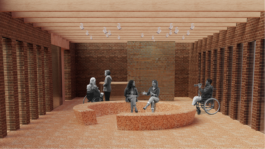
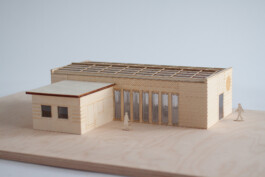
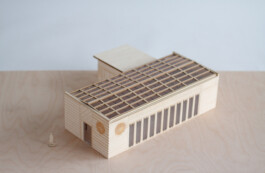
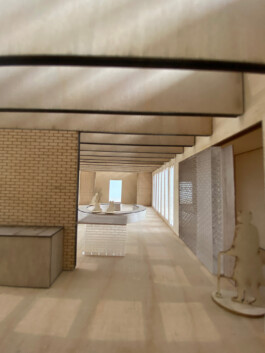
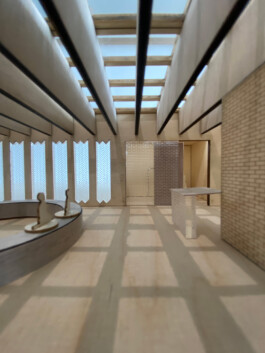
The Post office ZZ (PZZ) positions itself as a gesture of welcome for the planned Future Center* (Zukunftszentrum/ ZZ) in Halle (Saale). It opens up a space within the city for dialogue around its central theme: German reunification. A place is being created that provides a space for discourse on social transformations. It does not negate what was, but opens itself up and invites people to encounter themselves and others with their own experiences.
* The so-called “Future Center” is to conduct research on the topics of “German unity” and “European transformation.” Concrete approaches or research ideas have not yet been defined and are to be submitted by the general public. Our design addresses this newly created interface.
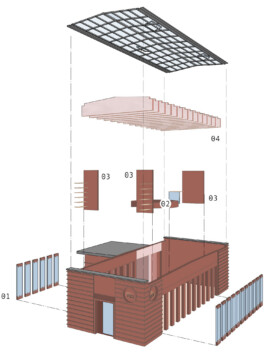
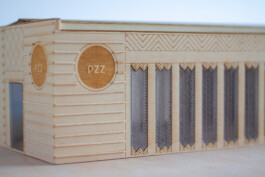
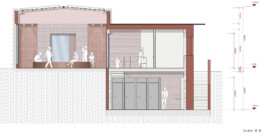
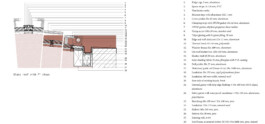
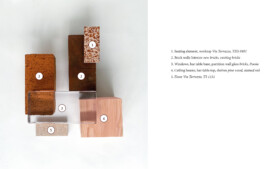
01. Existing ornamentation reproduced with glass tiles: New window openings, while historical traces remain visible.

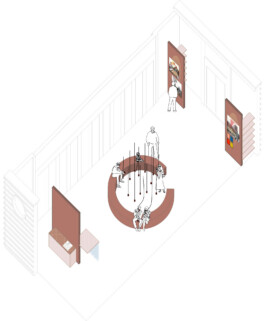
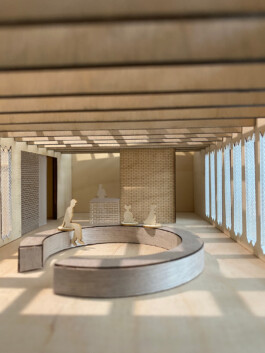
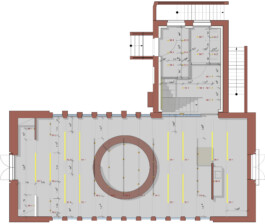
02. Recycling of removed inventory bricks as brick terrazzo: Central seating element as an analogy to the “East German Round Table”.
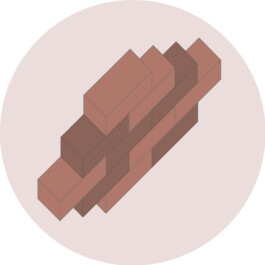
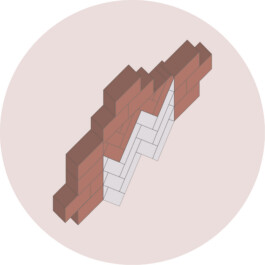
03. United together: Walls made of new and existing bricks, as well as glass bricks as work and exhibition surfaces, and a wardrobe.
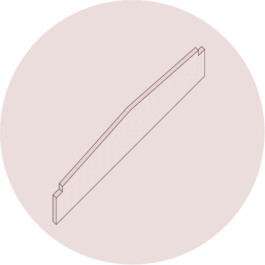
04. Roof beams made of pine: The pine tree references the transformation of the once treeless inner-German border into the “Green Belt”.
Thanks to the interviews and extensive research, we were able to classify the selected experiences of East Germans during the German reunification into three categories:
01
Remembrance culture and wealth distribution
02
Stereotypes and negotiations
03
Fiduciary and crises
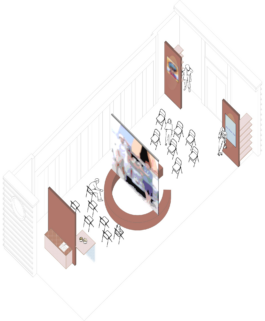
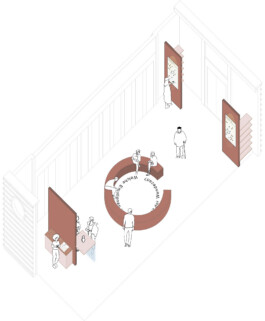
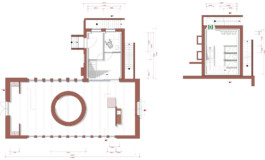
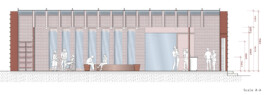
Based on interviews with contemporary witnesses of the reunification period, an interior space was created that can be used for various purposes such as 1. exhibitions, 2. film screenings, and 3. discussion formats, focusing on people and their emotions rather than purely on research:
To the Top
Post office ZZ
Forum for German Unity
PROJECT
Transformer · Transformation of three Transformer Houses in Halle’s City Center
Collaboration with Ricarda Schultze
SUPERVISION
Professor Andree Weißert · Research Associate Jannis Block
Period
Winter semester 2025/2026
·
The Post office ZZ (PZZ) positions itself as a gesture of welcome for the planned Future Center* (Zukunftszentrum/ ZZ) in Halle (Saale). It opens up a space within the city for dialogue around its central theme: German reunification. A place is being created that provides a space for discourse on social transformations. It does not negate what was, but opens itself up and invites people to encounter themselves and others with their own experiences.
* The so-called “Future Center” is to conduct research on the topics of “German unity” and “European transformation.” Concrete approaches or research ideas have not yet been defined and are to be submitted by the general public. Our design addresses this newly created interface.


01. Existing ornamentation reproduced with glass tiles: New window openings, while historical traces remain visible.
02. Recycling of removed inventory bricks as brick terrazzo: Central seating element as an analogy to the “East German Round Table”.
03. United together: Walls made of new and existing bricks, as well as glass bricks as work and exhibition surfaces, and a wardrobe.
04. Roof beams made of pine: The pine tree references the transformation of the once treeless inner-German border into the “Green Belt”.
Thanks to the interviews and extensive research, we were able to classify the selected experiences of East Germans during the German reunification into three categories:
01
Remembrance culture and wealth distribution
02
Stereotypes and negotiations
03
Fiduciary and crises
Based on interviews with contemporary witnesses of the reunification period, an interior space was created that can be used for various purposes such as 1. exhibitions, 2. film screenings, and 3. discussion formats, focusing on people and their emotions rather than purely on research:


To the Top
Website made with LayTheme · Get in touch · Imprint · Privacy Policy

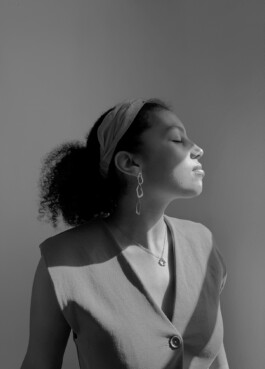
My name is Femi Alexandra Awokoya (born 2003, Germany). I am a student of interior architecture at Burg Giebichenstein University of Art and Design Halle.
This portfolio combines a selection of work from my interior architecture studies and an external project. I am particularly interested in architecture’s responsibility toward society. My focus is on building renovation, sustainable approaches, and the atmospheric and psychological impact of spaces.
My designs are characterized by a calm, minimalist aesthetic, often with a social focus. In addition to designing and visualizing, I am also interested in theoretical discussions about design and society.
Get in touch: f.awokoya03@gmail.com

My name is Femi Alexandra Awokoya (born 2003, Germany). I am a student of interior architecture at Burg Giebichenstein University of Art and Design Halle.
This portfolio combines a selection of work from my interior architecture studies and an external project. I am particularly interested in architecture’s responsibility toward society. My focus is on building renovation, sustainable approaches, and the atmospheric and psychological impact of spaces.
My designs are characterized by a calm, minimalist aesthetic, often with a social focus. In addition to designing and visualizing, I am also interested in theoretical discussions about design and society.
Get in touch: f.awokoya03@gmail.com
PROJEKT
ReMake Science · Ein Schiff für die Begegnung von Wissenschaft und Mensch
Zusammenarbeit mit Elisa Meincken
BETREUUNG
Prof. Rita Rentzsch · KM Luise Schuhmann
Zeitraum
Sommersemester 2026
·
In der Make Science Halle wird Wissenschaft erfahrbar. Dieser Entwurf erlaubt es Besucher:innen in die Forschungswelt einzutauchen, in der sie die Werkzeuge der Wissenschaft selbst aktiv nutzen können. Orientiert an einer gut strukturierten Werkzeugkiste geben sichtbare Markierungen an Decke und Boden ein Raster vor, in welches Regale eingespannt, Stauraum einsortiert und mobile Tische platziert werden und somit vielfältige Nutzungsmöglichkeiten erlaubt - etwa gemeinschaftliches Dinner, Workshops oder Podcastaufnahmen.
·
Das Raster ist an Böden und Decke gut sichtbar markiert und teilweise als Befestigungen für die neue Einrichtung ausgeführt.Eingespannte Aluminiumprofile werden durch Regalböden und Stahlnetze zu Stauraum- und Präsentationsflächen ergänzt. Innerhalb der Regalstruktur bieten Eurokisten Platz für zahlreiche Forschungstools. Ein farbig akzentuiertes Leitsystem erleichtert die Orientierung.
Planzeichnungen, Details, Deckenspiegel